

 dp
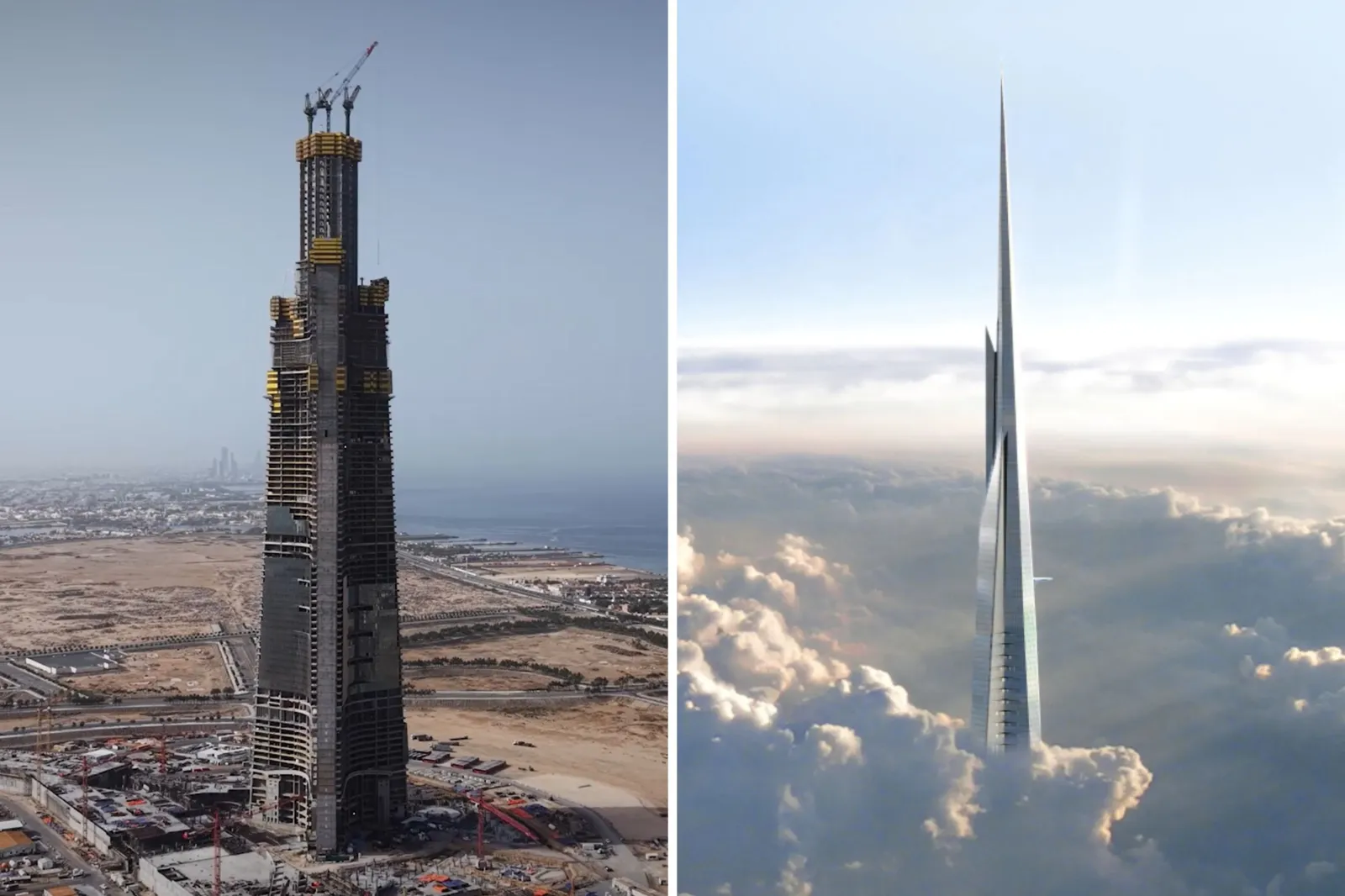
dpOne of the most unique aspects of Saudi Arabia’s Jeddah Tower, the world’s tallest building, is something barely visible to the eye—a significant portion of it will extend beyond the part of the atmosphere where most weather happens.
“One of the things that’s unique about Jeddah Tower is that really about a third of it is above the atmospheric boundary layer,” engineer John Peronto, managing principal at Thornton Tomasetti and project manager for the tower, told Newsweek. “We don’t talk about that a lot in tall buildings because not many have really achieved these levels of height.”
This rarely discussed feature underscores just how far the project pushes the limits of skyscraper design.
Once topped out, the Jeddah Tower—designed by architects Adrian Smith and Gordon Gill of Adrian Smith + Gordon Gill Architecture (AS+GG)—will rise above 1,000 meters (around 3,281 feet), surpassing Dubai’s Burj Khalifa, the current tallest building in the world, which stands at around 2,717 feet. Smith also designed the Burj Khalifa while at Skidmore, Owings & Merrill (SOM), before co-founding AS+GG.
The ambition of such supertall buildings also raises questions about their environmental impact.
Buildings are responsible for 39 percent of global energy-related carbon emissions—28 percent from operational energy and 11 percent from materials and construction, according to the World Green Building Council. A significant portion of this comes from embodied carbon, defined by the U.S. Green Building Council as “the millions of tons of Earth-warming carbon emissions” generated throughout the life cycle of building products, from extraction and manufacturing to construction, maintenance, and eventual disposal.
Gill previously acknowledged that supertall skyscrapers must contend with this reality, particularly in their structural systems, warning that the real challenge lies in refreshing existing buildings and making them more sustainable.
“The majority of embodied carbon that we’re seeing is primarily in the infrastructure and the structure of these buildings,” he told Newsweek earlier this month, comparing it to the unseen systems beneath a city. “It’s almost like a city…underneath the asphalt, there’s a whole other world under there that’s driving the embodied carbon of cities.”
Even so, efficiency remains a central goal. Gill described the Jeddah Tower as “extremely efficient,” adding that the balance between form and performance is critical. “When we talk about form and performance, these are the kind of things we strive for,” he said.
The World Green Building Council has warned that “upfront carbon”—emissions released before a building is operational—could account for half of the entire carbon footprint of new construction by 2050, stressing that addressing these emissions is an “urgent” priority for the sector.
Building Above the Boundary Layer
The tower’s interaction with the atmosphere offers a rare engineering advantage. The atmospheric boundary layer—typically the lowest one to three kilometers of the atmosphere—is where surface-driven forces such as friction, heat transfer, and turbulence have the greatest effect. It is also the zone where thunderstorms generate powerful downdrafts and high wind pressures.
Peronto explained that most of the extreme wind effects occur within this lower layer, particularly within the first few hundred meters above ground. But at greater heights, conditions shift. Advances in measurement techniques have shown that wind speeds become more layered, and while they may be more frequent, their peak loads can be less severe.
As he said, “once you kind of get above the atmospheric boundary layer…even though the winds are more frequently higher… the maximum loads are actually less than what you would see lower down,” because storm forces tend to push downward rather than persist at altitude.
This means that despite its height, parts of the tower may experience lower peak wind pressures than sections closer to the ground—a counterintuitive outcome that highlights how extreme height changes the engineering equation.

What Makes the World’s Tallest Skyscraper Stable
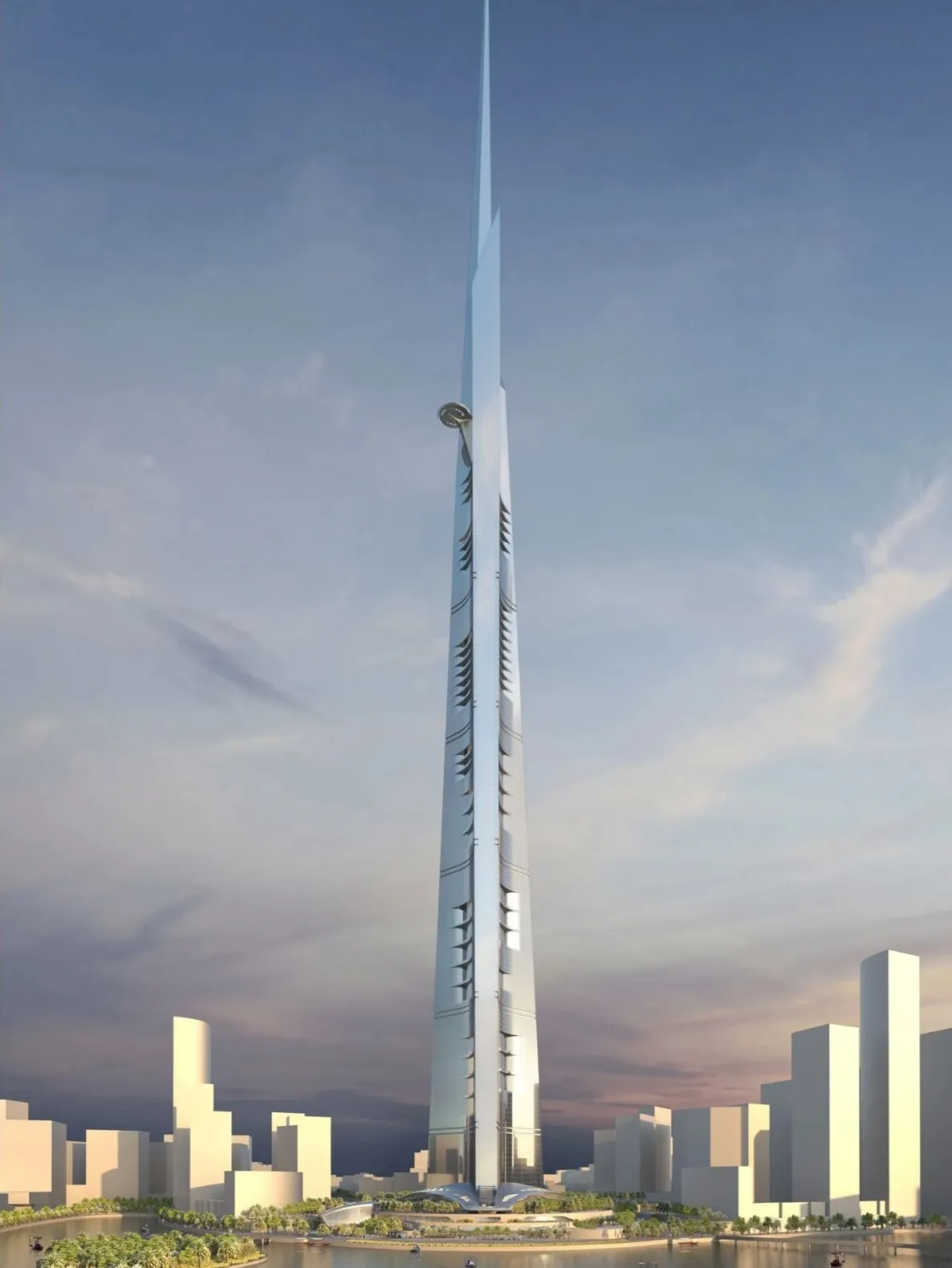
At the heart of the Jeddah Tower’s design is a tri-legged structural system, chosen for both efficiency and stability. Peronto explained that the concept draws on a fundamental principle—three points are the minimum required for balance. He noted that “the minimum number of legs…for stability is three,” questioning the need for a fourth when maximizing efficiency is the goal.
In practical terms, the geometry allows for a more efficient footprint. Peronto said a tri-legged structure can be rotated to “pretty much maximize the full circle…almost the entire way around,” making it more effective than a four-legged arrangement. As he summarized, “the tri-legged structure is a very efficient way to maximize stability, minimizing the amount of points of contact.”
Peronto believes the Jeddah Tower will “probably be the most comfortable tall building on the planet,” noting that “even though it’s the first man-made structure to hit a kilometer…there’s so much mass to the tower…it takes so much wind energy to actually excite the tower, even given its scale.”
Balancing Gravity and Form
Despite the emphasis on wind, Peronto noted that gravity ultimately governs much of the design. “What really drives these structures…is the fact that you have to resist such enormous gravity loads,” he said, explaining that the goal is often to minimize the tower’s footprint while keeping elements buildable.
To achieve this, the structure flares out at its base, distributing loads more efficiently without requiring excessively thick walls. Without such a strategy, he said, a straight tower would need increasingly thicker walls toward the bottom, adding to material use and complexity.
Together, these approaches—combining structural efficiency, atmospheric understanding, and careful material use—illustrate how the Jeddah Tower is redefining what is possible at the limits of height.
Do you have an architecture or design-related story to share? Let us know via [email protected], and your story could be featured by Newsweek.
Contact Newsweek editors on this story: Sirena Bergman and Emma Lee-Sang.


